Pride Logistics LLC

The Logistics of the Tokyo Olympic Games

The Tokyo Olympics, postponed for a year, have commenced with an exciting first few days of surprises, upsets, and a series of new world records. Pulling off an Olympic Games is always challenging, but this year in particular has been marked by added levels with the ongoing pandemic. And as the games go on, a surprising story is beginning to take shape, one that places the intricacies of last-mile delivery at the heart of a successful operation.

Tokyo Olympics: By the Numbers

More than 11,000 athletes have descended on Tokyo to compete in 339 events in 33 different sports across 40 venues as well as over 80,000 coaches, trainers, support staff, journalists, and media personnel. But it’s not just the people from 205 separate nations now calling Japan home for a month – thousands of tons of equipment and supplies are joining them.

Multiple hundreds of containers have been arriving at the ports of Tokyo and Yokohama with more shipments coming by air. All of it must be unloaded and transported to the right place at the right time, unscathed, and ready to be immediately used whether it’s equipment, uniforms, or food.

But this is where the challenges of last-mile delivery arise. It’s calculated that 30 percent of costs and upwards of 70 percent of issues in transportation occur in the last mile. That takes some serious supply chain planning to get around.

Movement on the Ground in Tokyo

In Tokyo, more than 37 million people live in the metropolitan city center making traffic congestion the most difficult part of the puzzle for Olympic logistics. The Olympic Village – where most of the equipment and people will head – is 18 km from the airport, 7 km from the Port of Tokyo, and 35 km from the Port of Yokohama. For the venues, 28 are within 10 km of Olympic Village and 14 are farther away, some up to a 75 km distance. 

So what does planning for the smooth transport of all people and freight look like? 

Increased traffic restrictions have been imposed around competition venues to limit unnecessary movement and crowded streets. Additionally, dedicated lanes and priority lanes to transport athletes and delegations will operate for the duration of the games. Expressways are also seeing limitations to usage to try to slow the flow of passenger vehicles to make way for all transportation related to the Olympics.

Getting Horses to Tokyo

One amazing feat of transportation that was accomplished with these games was moving 247 show horses for the Olympic Games, and an additional 78 horses for the Paralympic Games taking place directly after the Olympic Games. 

In a 6,000 mile trip from Belgium to Toyko, the first group of 36 dressage horses made the inaugural journey. Flying Emirates Sky Cargo Boeing 777s, the horses moved to Tokyo over eight separate flights, traveling two to a stall inside custom-made pallets. With snacks of hay and water, and sleeping standing up, all horses successfully made the over 20 hour journey.

It’s safe to say that the Tokyo Olympics have showcased a standout moment for logistics ingenuity in practice. The next time you watch your favorite event, take a moment to think of all the supply chains that made it happen!
5 Most Dangerous U.S. Highway Stretches for Truckers

The majority of professional truck drivers get through their entire careers without ever being involved in major accidents despite truck driving being one of the riskiest jobs in the United States. Although drivers are skilled in transporting loads using specialized equipment, and are safety conscious, road design is out of a driver’s control. And when that’s combined with bad weather, the result can be some of the most dangerous U.S. highway stretches for truckers. These are the top five that truckers try to avoid whenever possible.

Highway 550 in Colorado (The Million Dollar Highway)

Back in the 1880s, the stretch of highway from Ouray to Silverton in Colorado cost one million dollars to build – that’s how it got its nickname ‘The Million Dollar Highway.’ Today, this 25-mile section is one of the most dangerous for truckers to travel.

Aside from its many twists and turns through mountains that ascend up to 11,000 feet, the lack of shoulders or guardrails and the steep drop of the cliff can make for a harrowing drive. Add to that the erratic weather this region of the country can experience – from frequent snow, ice, and high winds during several months of the year – and you have a recipe for a potentially experience.

Highway 2 in Montana

This 760-mile section of Highway 2 stretches from the Washington state line on the western edge of Montana to just east of Bainville. The highway runs through extremely rural areas situated far apart from each other.

Winter weather conditions can make the road particularly hazardous as the region is prone to high winds, blizzards, and black ice. Population is sparse, there isn’t much traffic, and people tend to drive fast, something that is quite scary considering that emergency response time for ambulances can average up to 80 minutes.

Dalton Highway in Alaska

Also known as Alaska Route 11, this 414 miles of road winds through mountainous terrain, has only one fuel stop, and very little access to emergency services. This is the main road for truckers to get from Fairbanks to the northern areas of the state.

Dalton Highway routes through the mountains of the Brooks Range, where America’s lowest temperature of 80 degrees below zero was recorded in 1971. Making the icy driving conditions worse, the highway was opened to tourists in 1994. Today, helicopters patrol the area looking for troubled motorists twice a day.

Interstate 10 in Arizona

Interstate 10 is America’s fourth-longest interstate highway and stretches from the west to the east coast of the country. Arizona’s portion of Interstate 10 totals just over 360 miles and consists of long stretches of flat, desolate desert.

This area of the highway features high traffic volume and a lack of median barriers, making it a visually crowded route for drivers. There’s only one fuel stop on the whole route, and the 150-mile span from Phoenix to the California border is among the nation’s most dangerous highways.

Interstate 95 in Connecticut

One of the nation’s oldest highways, Interstate 95 runs for more than 1,900 miles from Houlton, Maine to Miami. It’s the longest north-south interstate in the country.

It runs through numerous heavily populated cities, especially in the Northeast, and is responsible for many fatalities each year. The majority of accidents occur on an 8-mile stretch through the city of Norwalk, Connecticut. Tractor-trailer accidents are highly susceptible to the winter storms, springtime heavy rains, and random high winds.

Spotlight on Our Cities: 9 Best Holiday Light Displays in the United States

One of our favorite things to do on cold, wintery nights, is to grab some hot cocoa or hot cider and head out to view holiday lights. All across the country, there’s something especially magical about exploring fantastical and breathtaking light displays created just for the holidays. It really brings to life the cities and gateways through which millions of freight shipments pass throughout the year.

So kick back and enjoy as we bring you the 9 most dazzling holiday light extravaganzas in the United States. Hopefully one is in a city near you and you’ll be inspired to venture out to enjoy the spectacle firsthand!

Hershey Park’s Sweet Lights

Hershey, Pennsylvania

At this annual display in Hershey Park, you can drive through two miles of pathway littered with almost 600 illuminated and animated displays. It takes up to an hour to get through the forest trails and includes special Holospec glasses that make it appear that it’s snowing.

Mission Inn Festival of Lights

Riverside, California

For almost three decades, the Mission Inn Festival of Lights has been a favored holiday tradition in Southern California. During the holiday season, no corner of the historic hotel is left untouched as five million lights adorn the grounds, along with over 400 animated angels, elves, carolers, and reindeer. 

WildLights at The Living Desert Zoo and Gardens

Palm Desert, California

With over a million lights transforming this desert zoo into a lighted nighttime oasis, it’s sure to be a memorable experience. Life-sized light animals line all areas of the zoo and garden grounds along with a light and music tunnel.

Illumination at Morton Arboretum

Lisle, Illinois

This award-winning light show is truly unlike any other on this list! Throughout the entire 50 acres of the arboretum, visitors are welcomed by a one-of-a-kind light show with swirling light projections and music creating an all-encompassing holiday light experience.

ABQ BioPark Botanical Garden’s River of Lights

Albuquerque, New Mexico

The BioPark Botanical Garden’s River of Lights takes a unique spin on holiday light shows. In this special display, you’re taken into a colorful underwater ecosystem as it comes to life with marine animals, other wildlife, and millions of sparkling lights.

Oglebay Winter Festival of Lights

Wheeling, West Virginia

This Festival of Lights features a six-mile drive through 300 acres of twinkling lights. Beginning in 1985, the experience has grown into one of the nation’s largest holiday light shows with 90 lighted attractions and over a million lights.

Candy Cane Lane

Woodland Hills, California

For over six decades, local homeowners have teamed up to create what has now grown into an eight-block holiday light extravaganza affectionately termed Candy Cane Lane. Year after year, home displays get bigger and brighter as competition and ideas grow.

Bentleyville Tour of Lights

Duluth, Minnesota

Featuring over four million lights displayed throughout a 20-acre park sitting on the shore of Lake Superior in Duluth, Minnesota, the Bentleyville Tour of Lights is a breathtaking walk or drive-through light extravaganza. Making it extra special is all the light reflections off the waters of Lake Superior (if it’s not frozen).

Glittering Lights at Las Vegas Motor Speedway

Las Vegas, Nevada

On this 2.5-mile holiday lights drive through the Las Vegas Motor Speedway, visitors experience a completely redesigned area of tunnels filled with twinkling lights. Showcasing various themes and every color you can think of, it’s an impressive holiday light show.

The Legendary Lights of Historic Clifton Mill

Clifton, Ohio

For over 30 years, the Clifton Mill has illuminated the mill, the gorge and the surrounding riverbanks, trees, and bridges with over 4 million lights. There’s even a 100-foot waterfall of twinkling lights along with a synchronized lights and music show on the old Covered Bridge.

Hopefully one of these spectacular holiday light extravaganzas is in a city near you and you’ll be inspired to venture out to enjoy it firsthand!

5 Worst Winter Storms to Ever Hit the United States

Winter storms throughout the U.S. have the ability to create some of the most hectic, harsh, and harrowing weather conditions. The National Weather Service has been tracking storms across the country since its initial founding in 1890. In that time, almost every state across the country has experienced intense ice and snow storms, blizzards and hurricanes during winter months.

To kick off our move into the winter weather season, we thought it’d be fun to reveal the five worst winter storms to ever hit the U.S. And then we can all feel thankful that there’s still time to plan and prepare so any storms this year can have minimal impact on supply chains.

The Knickerbocker Storm of 1922

knickerbocker snowstorm 1922

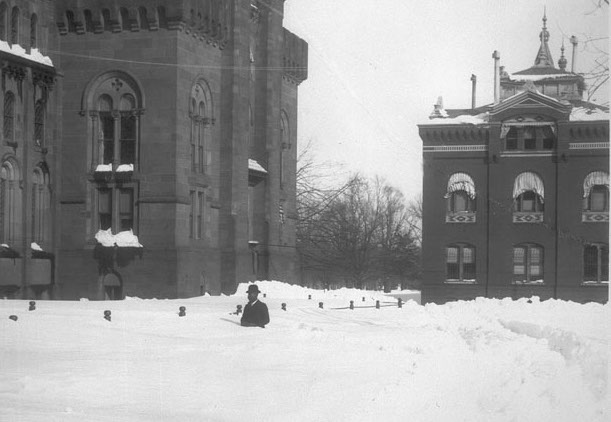
A man walks through the snow coming chest height after the infamous Knickerbocker Snowstorm.


Taking place over about two and a half days from January 27-29, this storm was a complete surprise. On January 26, the Washington Times reported fair weather and slowly rising temperatures in its forecast for the D.C. region.

Over this short period of time, a record-breaking 28 inches of snow blanketed the city. Cars and trolleys ended up stuck on streets wherever they were left as people headed home. The storm is named for the famed Knickerbocker Theatre in Washington, D.C. Because of the heavy and prolonged dumping of snow, the roof of the theatre collapsed under the weight, killing 98 people and injuring another 133 who were there watching a silent film.

The Great Appalachian Storm of 1950

great appalachian storm

Cars and trucks were abandoned in the middle of the road during the Great Appalachian Storm.


Part blizzard and part hurricane, this winter storm is one of the most meteorologically unique storms on record. Also called the Great Thanksgiving Storm since it started on November 24 and lasted over the Thanksgiving holiday. Cycling through 22 states, areas from Maine to Florida experienced torrential rain and coastal flooding. 

Snowstorms covered the country from West Virginia to Pennsylvania with more than 30 inches of snow, some areas even reaching 57 inches of snow. High, freezing winds reaching gusts of 160 mph in some regions caused over 1 million power outages.

The storm completely covered Ohio in a foot of snow, but the annual Ohio State vs. University of Michigan football game traditionally played over the holiday went on as planned. It immediately became a legendary winter sports game and earned the nickname the Snow Bowl. Michigan won, 9-3.

The Superstorm of 1993

superstorm 1993

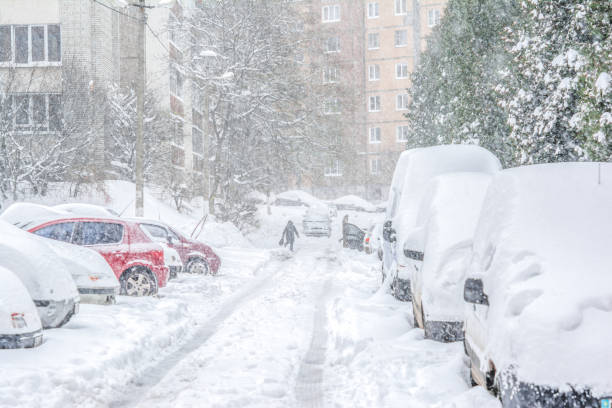
A snow-covered street and cars with people trying to move about safely during the Superstorm of 1993.


Also known as the Storm of the Century (although this term has often been used to describe many storms including others on this list), this superstorm had an incredibly devastating impact. The entire Eastern third of the country experienced record snowfall and deadly tornadoes.

Beginning on March 12, snow covered the country from Maine to Florida, affecting more than 100 million people living in those areas. Tennessee and North Carolina measured up to 60 inches of snow, New York saw 43 inches of snow, and most of the northeast had at least 20 inches.

The snowstorm was much more than a blizzard, being categorized as a cyclone and a category 5 storm. In the end, the superstorm caused $2 billion worth of damage and holds the record for the largest interruption to air travel due to weather in United States history.

Snowmageddon 2010

snowmageddon snowy street

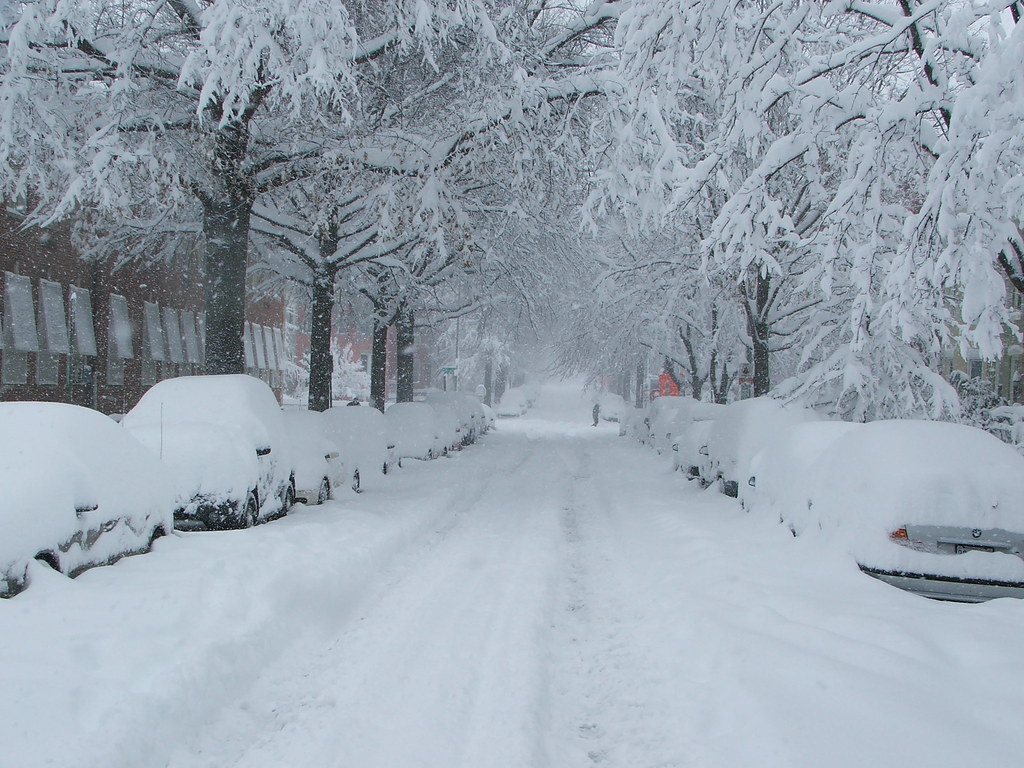
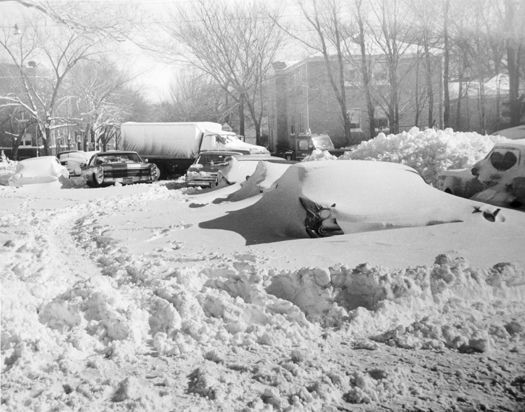
Cars on the road became completely trapped under many feet of snow during Snowmageddon.

This winter storm of February 5-6 was actually two blizzards that hit back-to-back over a two day period. Residents throughout the Northwest and Mid-Atlantic regions were completely snowed in and Washington, D.C. completely shut down.

For 30 straight hours, snow fell completely uninterrupted, leading to whiteout conditions in many areas. Just over 32 inches of wet, heavy snow fell. The weight of the wet snow caused a slew of property damages from collapsed power line poles to collapsed roofs to a destroyed airport hangar. In total, six states throughout the region declared national emergencies.

The Polar Vortex of 2019

polar vortex lake michigan

Ice floats on Lake Michigan in Chicago as bitter cold grips the Midwest with the Polar Vortex.

In late January, an Arctic cold front known as a “polar vortex” swept across the Midwestern United States. Over several days, the region was rocked with the coldest, most severe temperatures on record.

Basically a frigid cyclone, upwards of 2,000 flights were canceled, hundreds of schools were closed, and hundreds of cases of frostbite and hypothermia were reported. Over 30 different temperature records were broken with windchills in Minneapolis-Saint Paul plunging as low as -65 degrees Fahrenheit. In these conditions, frostbite could affect exposed skin in less than five minutes.

Devastating winter storms are all a feature of the season. Thankfully, we can be much better prepared for when these storms hit and downplay any big surprises. When it comes to your winter freight needs, be sure to partner with an experienced team known for their weather planning and proactive safety measures. That’s the Pride Logistics difference, every time.

The 6 Most Haunted Roads in the US and Why They’re So Spooky

Miles-long stretches of road, short alleyways, and interstate highways, oh my! With the change of seasons to fall, the advent of blustery weather and the kick-off of the holiday season with Halloween, it seems only fitting to take a tour through some of the most haunted roads in the US for a little seasonal fun. Read on for some spooky tales and whether any could be right around the corner from you!

Route 66

Perhaps the most famous highway in America, Route 66 has appeared in movies, books, and songs ever since it first broke ground in 1926. It was one of the first highways in the US Highway System, running from Chicago to the Pacific Ocean. With all the ground that it covers, it’s practically impossible that there wouldn’t be several spooky stories about this highway.

Well, along its entire 2,448 miles, there’s upwards of 100 frightening spots. Everything from a hotel in Flagstaff, Arizona where it’s said a phantom bellboy knocks on guests’ doors at night to a movie theater in Albuquerque, New Mexico where a mischievous little boy who died there in a 1951 boiler explosion plays little tricks on guests.

Route 2A in Maine

Route 2A Maine

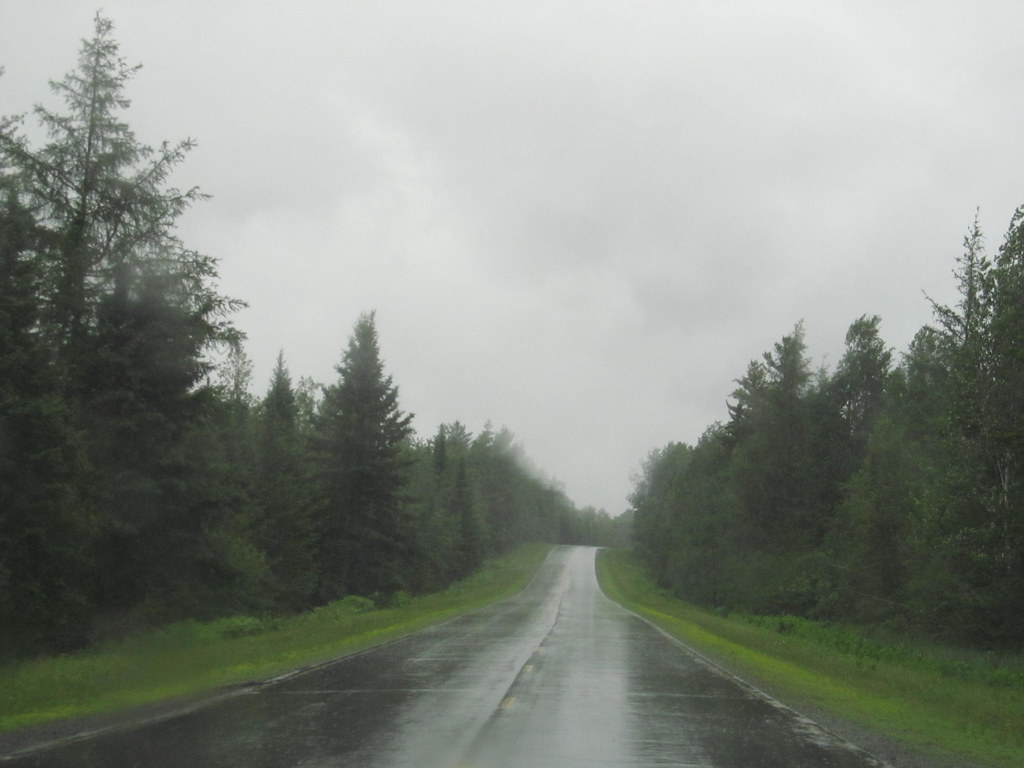
A stormy day on the tree-lined Route 2A in Maine.

Legends abound that this highway is haunted by numerous spirits of car and truck drivers alike who didn’t make it through an infamous hairpin turn on the way to Boston. Deep in Maine’s Haynesville Woods, Route 2A has generations of ghost stories to share and has even inspired a hit song from 1965, A Tombstone Every Mile by Dick Curless

To those who have been brave enough to tell the tale, there’s an often repeated story of an extra-dimensional encounter along this route. According to stories, a little girl who died along this route in 1967 still wanders the road asking drivers for rides before disappearing from the passenger’s seat.

Clinton Road, New Jersey

About an hour outside of Manhattan, Clinton Road is a 10-mile stretch that is the site of multiple urban legends. Drivers often report phantom headlights that disappear into thin air and one particularly ominous turn has been given the name Dead Man’s Curve.

According to one specific tale, there’s a haunted bridge on Clinton Road where a boy may have been hit by a car or drowned. Legend has it that if you throw a coin into the water off the bridge, he’ll toss it right back, or at least return it to sit on the edge of the bridge by nightfall.

Archer Avenue in Chicago

Archer Avenue Chicago

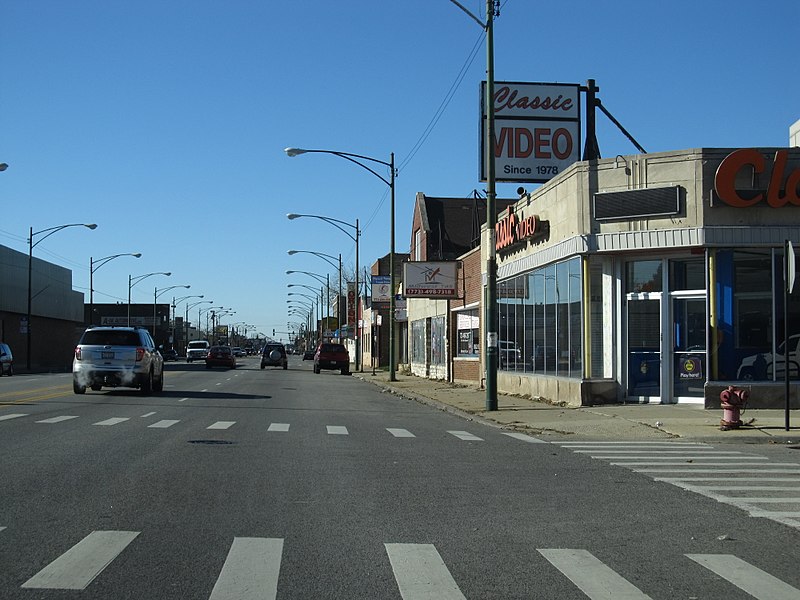
A typical stretch of Archer Avenue in daylight hours.

Famously one of the most haunted roads in America, this street connects lakes, rivers, two cemeteries and native religious gathering places. Today, nighttime drivers report seeing hooded figures slowly moving along the road, phantom hearses, and even one ghost in particular who has been so consistent she’s gained the name of “Resurrection Mary.”

What’s so unique about Resurrection Mary’s story is the amount of similar detail that every person who encounters her has to say. All those who encountered her report a woman with blonde hair and blue eyes and wearing a white party dress. For those who do stop to offer her a ride home, she disappears soon after.

Prospector’s Road in California

Getting its name from the California Gold Rush, Prospector’s Road is located halfway between Sacramento and Lake Tahoe. The road is believed to be haunted by a whole crew of former fortune seekers who met an untimely demise while hunting for gold.

The Old West is typically a prime source for spooky and haunted encounters and this road is no different. Some visitors have even expressed that they’ve heard the ghostly sound of more than one prospector telling them to “get off my claim.”

Bragg Road in Texas

Bragg Road Texas

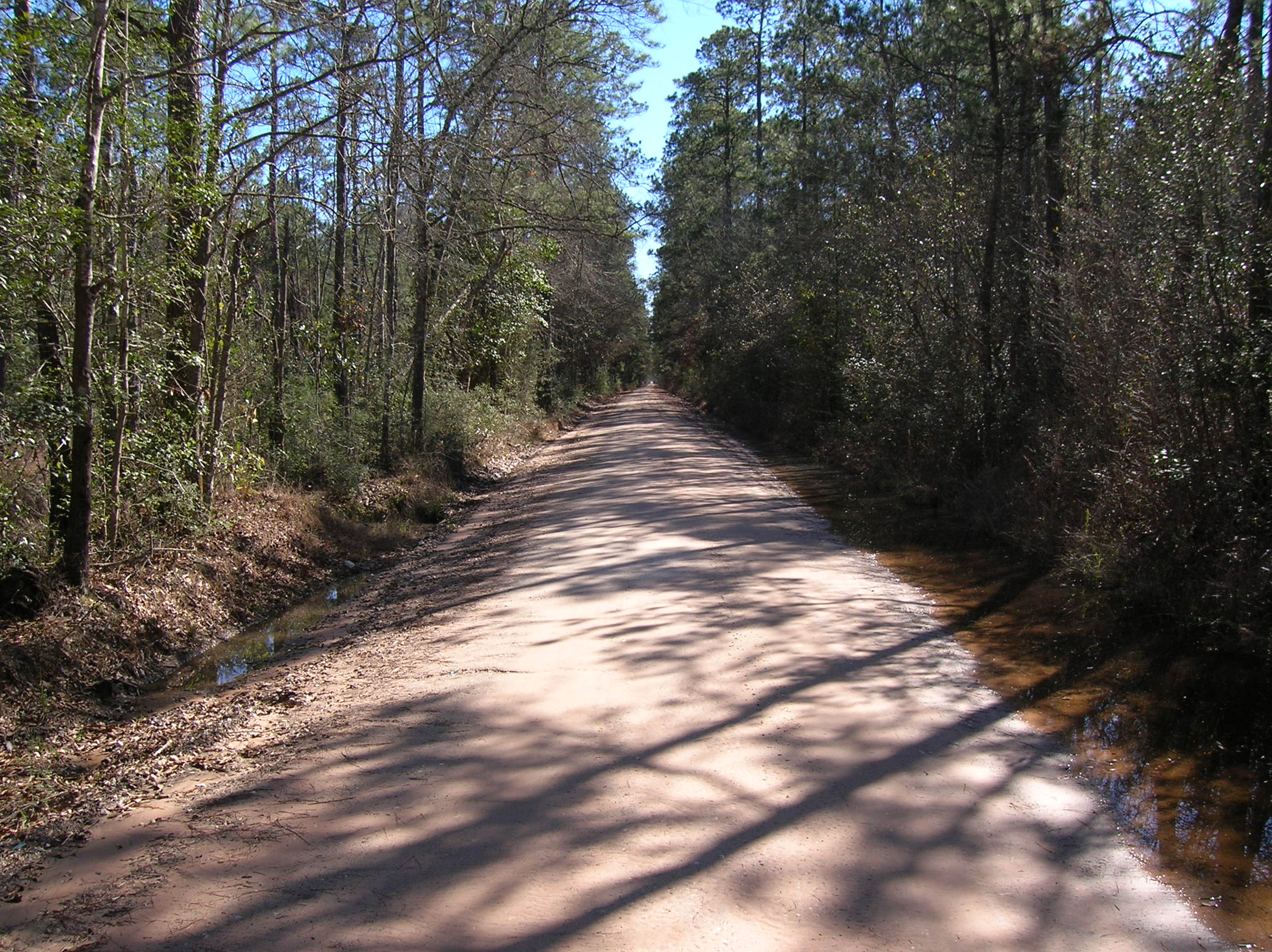
The only dirt road on our list, Bragg Road during the day.

Located in Hardin County Park, Texas, this unpaved, isolated road is like many that can be found in the area. However, it’s only this one that gets the nickname “Ghost Road” because of its mysterious light that often appears out of nowhere.

Urban legends abound as to where this light can be coming from. Some prefer more practical explanations like that it’s a reflection of light from a passing car or some kind of gas. But many more believe that it’s possibly the light of a hunter forever lost in the woods.

Whether a slight scare sounds fun or you want to avoid it altogether, these roads are traveled by hundreds of thousands up to millions of travelers and truck drivers alike. So the next time you think you may be on a stretch of spooky road, remember that it’s probably just a trick of some light or the wind!